
Homeowners across Chicagoland and Northwest Indiana experience extreme seasonal swings that place constant stress on their roof system. Hot summers, freezing winters, heavy snow, and fluctuating moisture levels all interact inside the attic space, often in ways that are not visible from the living space below. Proper attic ventilation plays a critical role in how well a roof performs over time, influencing everything from energy efficiency to moisture control and overall roof durability.
From a service provider perspective, we routinely see that many costly repairs and premature roof replacements can be traced back to poor ventilation rather than defective roofing materials. Understanding how attic airflow works and how to evaluate it safely gives homeowners throughout Chicagoland and Northwest Indiana the knowledge needed to protect their roof’s lifespan and avoid preventable damage.
Key Takeaways
- Proper attic ventilation supports roof durability by managing heat buildup and moisture accumulation throughout the year.
- Balanced intake and exhaust vents help maintain consistent airflow that protects roofing materials and the roof deck.
- Poor ventilation can contribute to ice dams, mold growth, and uneven roof temperatures common in Midwest homes.
- Safe evaluation of attic ventilation focuses on visual checks and professional assessments rather than do-it-yourself modifications.
- Improving attic airflow can lead to better energy efficiency, lower cooling costs, and fewer long-term roof repairs.
How Proper Attic Airflow Protects Midwest Roof Durability
Attic airflow directly affects how heat and moisture behave inside the attic throughout the year. In Midwest homes, this movement of air plays a major role in protecting the roof system from seasonal damage and is often evaluated during a professional roof inspection when airflow concerns are suspected.
Managing Heat Buildup Under Midwest Summer Conditions
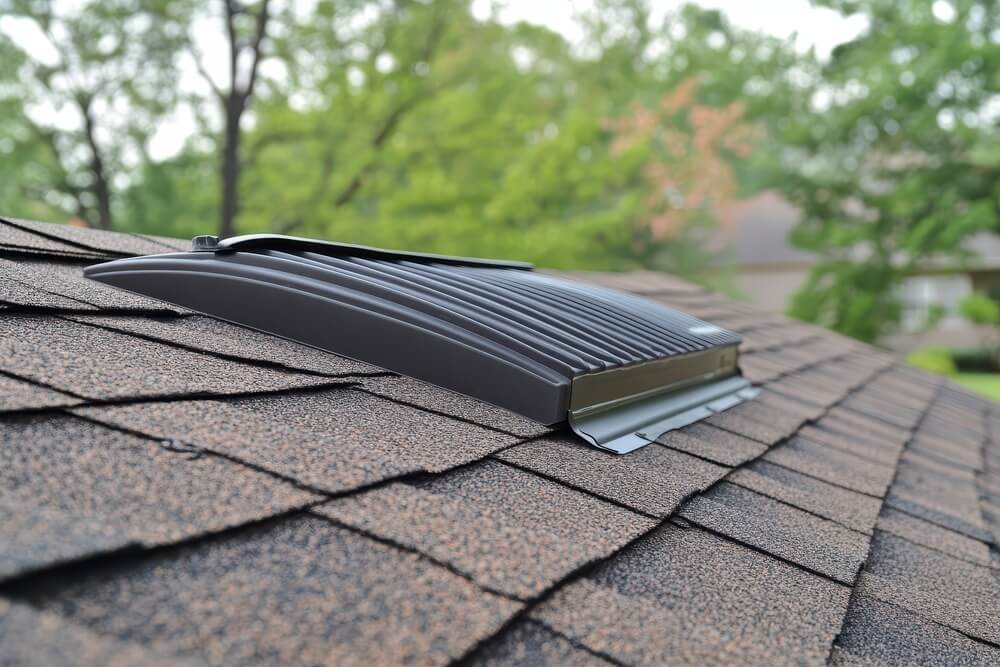
In hot summers common to Chicagoland and Northwest Indiana, excessive heat can become trapped inside the attic, causing roofing materials to age faster than intended. From our experience, proper attic airflow allows hot air to escape through roof vents while drawing in cooler outside air, reducing heat transfer to the roof deck. This natural flow helps maintain more stable temperatures across the roof system, which can reduce the likelihood of premature issues that later require roof repair.
Preventing Moisture Buildup During Cold Seasons
Cold winters introduce a different challenge as warm air from the living space rises into the attic and meets cold surfaces. Without adequate ventilation, this warm air can condense, leading to trapped moisture and long-term moisture damage. As a service provider, we see that proper ventilation systems help remove moist air before it settles on the attic floor, insulation, or interior walls, protecting the roof deck and supporting the long-term performance of the overall roof system.
Reducing the Risk of Ice Dams Along the Roof’s Edge
Ice dams are a frequent issue in Chicagoland due to uneven roof temperatures caused by poor attic airflow. When heat buildup warms the roof deck, snow melts and refreezes at the outer edge, creating damaging ice dams. Proper airflow, typically achieved with soffit and ridge vents working together, helps maintain consistent roof temperatures and can extend the service life of both traditional shingles and specialty systems such as metal roofing.
Protecting Roofing Materials From Premature Wear
Roofing materials are designed to perform within specific temperature and moisture ranges. From our inspections, we often find that poor ventilation accelerates shingle deterioration, warping, and cracking. Adequate ventilation supports continuous airflow that protects materials from excessive heat and trapped moisture, helping delay the need for a full roof replacement.
Steps To Evaluate And Improve Attic Ventilation Safely
Evaluating attic ventilation does not require risky do-it-yourself changes. A safe, methodical approach helps homeowners understand potential issues while avoiding damage or personal injury, especially in older homes common throughout areas like Arlington Heights and Crown Point.
Identify Visible Signs of Poor Ventilation
Homeowners in Chicagoland can often spot early warning signs of poor ventilation without entering the attic, such as uneven roof temperatures, higher energy bills, or visible moisture stains on exterior walls. From a professional standpoint, these indicators suggest that the attic ventilation system may not be allowing air to move effectively through the attic space.
Perform a Safe Attic Visual Inspection
When conditions allow, a basic visual inspection of the attic can reveal blocked soffit vents, compressed insulation, or moisture accumulation. We always advise homeowners to prioritize safety by using protective gear and avoiding contact with exposed wiring or unstable attic floors, as unfinished attics can present hidden hazards.
Understand Intake and Exhaust Balance
Effective attic airflow depends on a balanced system of intake vents and exhaust vents that allow fresh air in and warm air out. From our service experience, many homes have roof vents installed but lack adequate intake at the roof’s edge, preventing proper airflow. Correcting this imbalance is often key to improving ventilation without major structural changes.
Know When Professional Evaluation Is Needed
While homeowners can observe surface-level issues, a full evaluation of attic ventilation is best handled by professionals familiar with Midwest building conditions. Our assessments consider attic insulation, rafter vents, insulation baffles, and overall ventilation system design to ensure improvements are effective and aligned with long-term roof performance.
Ready to Protect Your Roof Long Term
If you want confidence that your attic ventilation is supporting long-term roof durability, M&M Home Remodeling Services offers professional evaluations tailored to homes across Chicagoland and Northwest Indiana.
Contact us to schedule a consultation and protect your roof system with proven expertise.
Frequently Asked Questions
How does attic ventilation affect roof performance in Chicagoland?
Attic ventilation directly influences how heat and moisture move through the attic space, which impacts roof durability. In Chicagoland’s variable climate, proper ventilation helps prevent heat buildup in summer and moisture accumulation in winter, both of which can lead to costly repairs if left unaddressed.
Can poor attic ventilation increase energy costs?
Yes, poor ventilation often forces the air conditioner to work harder during hot summers by allowing excessive heat to remain trapped in the attic. Improving attic airflow can support a more energy-efficient home and help reduce cooling costs over time.
Are attic fans necessary for proper ventilation?
Attic fans can be useful in certain situations, but they are not always required. From a service provider perspective, a properly designed system using soffit vents, ridge vents, and consistent airflow often delivers effective results without mechanical assistance.
When should a homeowner schedule a ventilation inspection?
Homeowners should consider an inspection when experiencing uneven roof temperatures, ice dams, moisture buildup, or rising energy bills. Regular professional evaluations help ensure the attic ventilation system continues to support the roof’s lifespan and overall structural integrity.