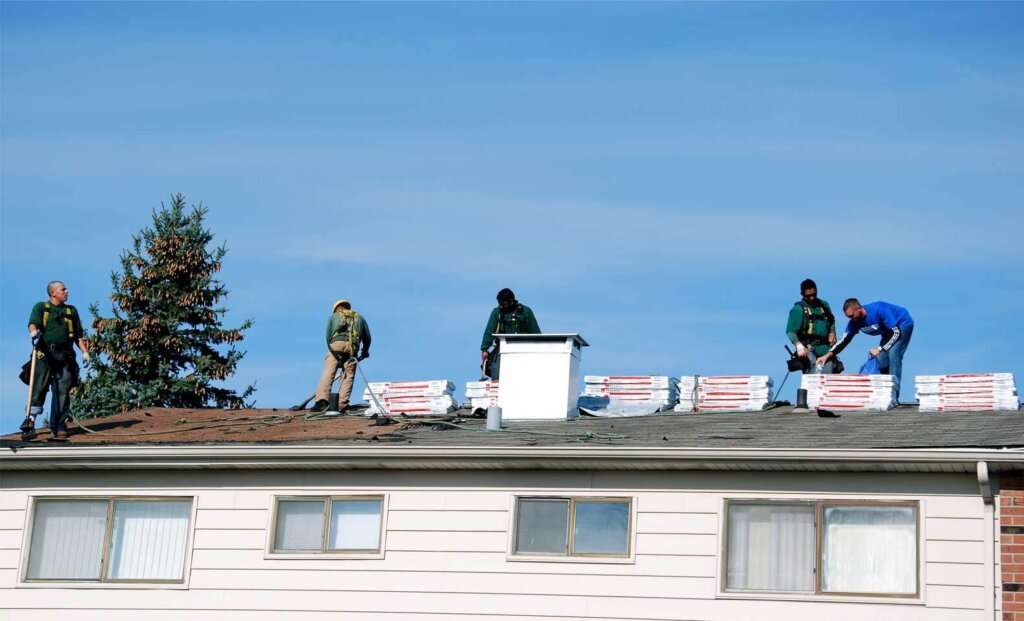


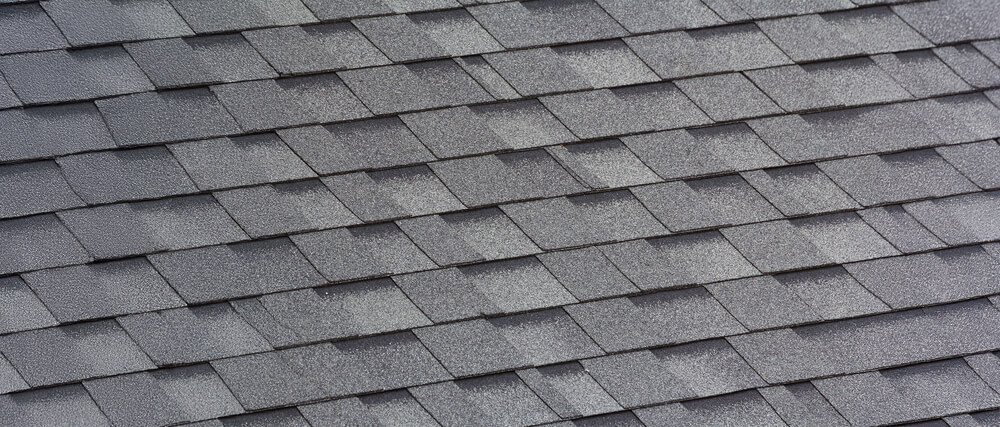
Roof granule loss is one of the most common concerns we hear from homeowners across Illinois and Indiana, especially after heavy rain, snowmelt, or severe storms. Asphalt shingles are designed to shed a small amount of granules over time, but knowing how much granule loss is normal versus when it signals deeper problems can protect your roof’s lifespan and help avoid costly repairs.
With Midwestern weather exposing roofing materials to UV rays, temperature swings, and wind-driven rain, understanding shingle granule loss helps homeowners make informed decisions before roof leaks or structural damage occur.
Key Takeaways
- A few granules in your gutters are often normal, especially on a new asphalt roof.
- Excessive or widespread granule loss can expose the asphalt layer and shorten the roof’s lifespan.
- Harsh weather conditions in Illinois and Indiana can accelerate premature granule loss.
- Regular inspections help identify warning signs before water intrusion develops.
- A professional roofing contractor can determine whether repairs or roof replacement are needed.
Normal vs. Serious Roof Granule Loss Homeowners Should Watch
Not all granule loss means your roof is failing. The key is understanding patterns, timing, and scope. These are the most common scenarios we evaluate for homeowners across Illinois and Indiana, including communities such as Crete and Naperville, where seasonal weather shifts place added stress on asphalt roofing systems.
Minor Granule Shedding From New Asphalt Shingles
On a new asphalt roof, it is common to notice a few granules accumulating in gutters or downspouts during the first year after roof installation.
These loose granules come from the manufacturing process and early exposure to heavy rain, and they typically surface during routine professional roof inspections without affecting the protective layer or fire resistance of the shingles.
Gradual Granule Loss From Normal Wear
As asphalt shingles age, gradual granular loss occurs as part of normal wear, particularly on older roofs throughout Chicagoland and Northwest Indiana. This slow process reflects years of UV protection and weather exposure rather than a defect, and it does not always require roof replacement when monitored properly.
Localized Granule Loss From Foot Traffic
Granules can become loose in specific areas where foot traffic has occurred during maintenance or inspections. In these cases, homeowners may benefit from targeted roof repair strategies that limit future wear while preserving the integrity of surrounding shingles.
Excessive Granule Loss After Severe Weather
When severe storms, hail, or heavy rain cause significant granule loss across large sections of the roof, it becomes a serious concern for homeowners in Illinois and Indiana. Conditions like these often lead us to evaluate storm-related damage more closely, especially on homes with complex rooflines or aging asphalt systems.
Bald Spots Indicating Premature Damage
Visible bald spots or bare areas on asphalt shingles point to premature granule loss that goes beyond normal aging. In our experience, these warning signs often indicate installation issues or material failure that warrant a professional evaluation before water intrusion develops.
When to Inspect and Decide Next Steps for Chicagoland Homes
Timing matters when it comes to granule loss. Knowing when to inspect your roof and how to respond can make a significant difference in long-term performance and repair costs, particularly in climates that experience snow, wind, and freeze-thaw cycles.
Inspecting After Heavy Rain or Snowmelt
Midwestern weather makes it important to inspect your roof after heavy rain or seasonal snowmelt, when granules in your gutters may become more noticeable. During these periods, scheduling a professional roof inspection helps determine whether the issue is cosmetic or an early sign of roof leaks.
Monitoring Older Roofs for Widespread Granule Loss
Older roofs require closer attention because widespread granule loss often accelerates near the end of a roof’s lifespan. For many homeowners, this is also the stage when alternative roofing materials such as metal roofs become part of long-term planning discussions.
Scheduling a Professional Roof Inspection
A professional roof inspection provides clarity when homeowners are unsure how much granule loss is too much. Having the roof inspected by an experienced roofing professional allows us to assess whether repairs are sufficient or if replacement planning should begin.
Deciding Between Repairs and Roof Replacement
When inspections reveal significant granule loss combined with leaks or structural concerns, choosing between targeted repairs and full replacement becomes critical. Acting early helps Illinois and Indiana homeowners avoid escalating damage caused by ongoing exposure to harsh weather.
Get Peace of Mind With a Professional Roof Inspection
If you are concerned about roof granule loss or want a clear, professional assessment, M&M Home Remodeling Services has been helping homeowners across Illinois and Indiana protect their homes since 1976. Our experienced team provides thorough roof inspections and straightforward guidance focused on long-term peace of mind.
Contact us to schedule your inspection and take the next step with confidence.
Frequently Asked Questions
How much granule loss is considered normal on an asphalt roof?
A small amount of granule loss, especially on a new asphalt roof or after heavy rain, is considered normal. Concern begins when you see excessive granule buildup, bald spots, or widespread loss that exposes the asphalt layer beneath the shingles.
Can clogged gutters be a sign of roof granule loss problems?
Yes, clogged gutters filled with granules can indicate shingle granule loss. While some granules are expected, consistent accumulation often points to excessive loss that should be evaluated by a roofing professional.
Does granule loss affect energy efficiency and fire protection?
Granules protect asphalt shingles by reflecting UV rays, shedding water, and contributing to fire resistance. When granules are lost prematurely, the roof can absorb more heat and become more vulnerable to weather-related damage.
When should I call a professional roofing contractor?
Homeowners should contact a professional roofing contractor if they notice widespread granule loss, roof leaks, or water stains inside the home. Early evaluation helps prevent further damage and supports informed decisions about repairs or roof replacement.